Harmonics & reflected-wave calculators
Rockwell Automation (Allen-Bradley), via Transim
Clients & partners



About Harmonics & reflected-wave calculators
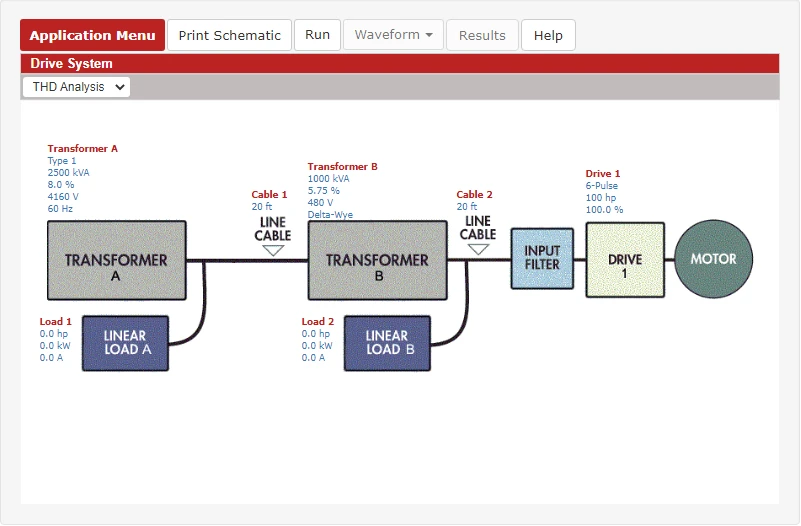
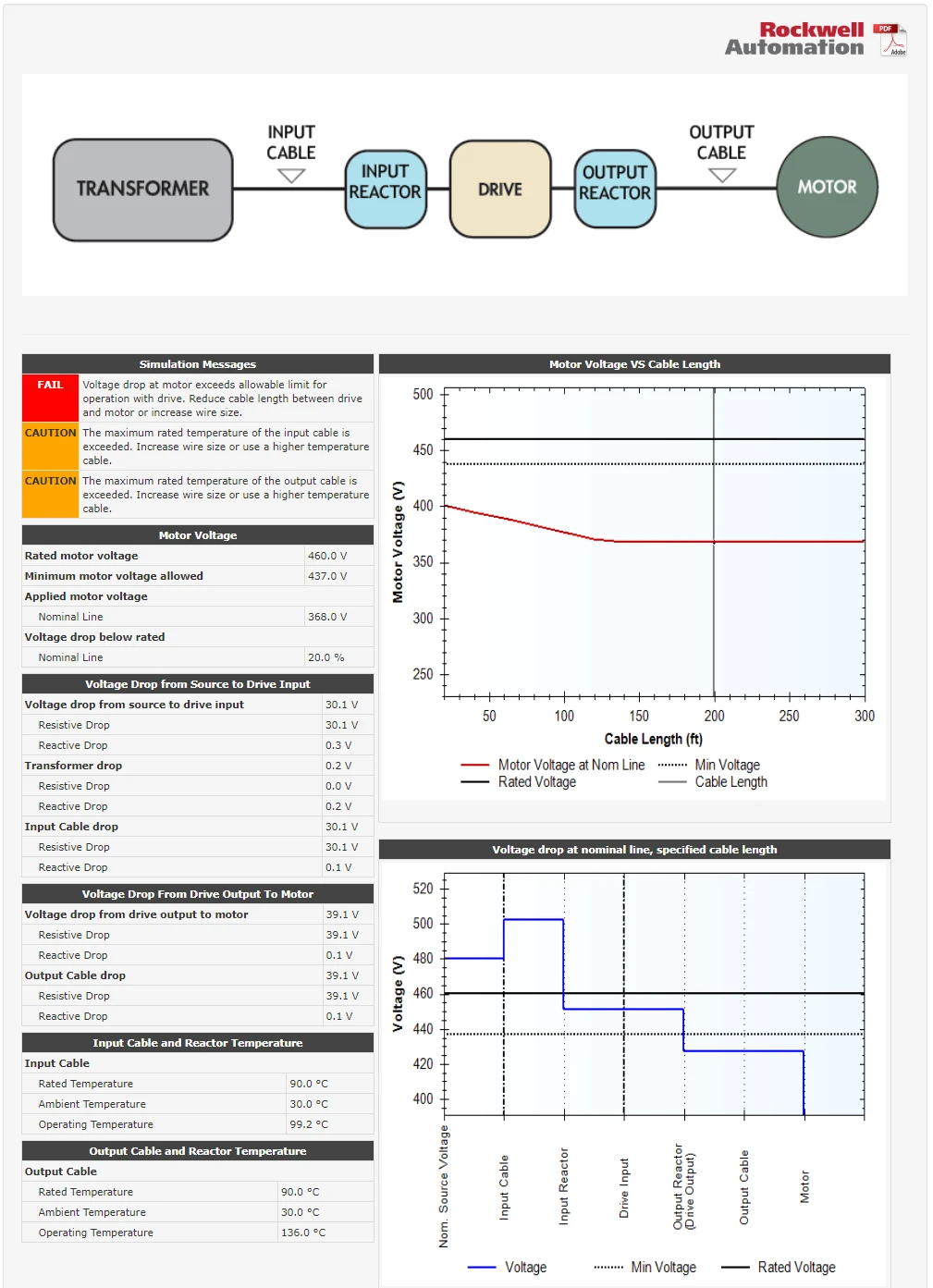
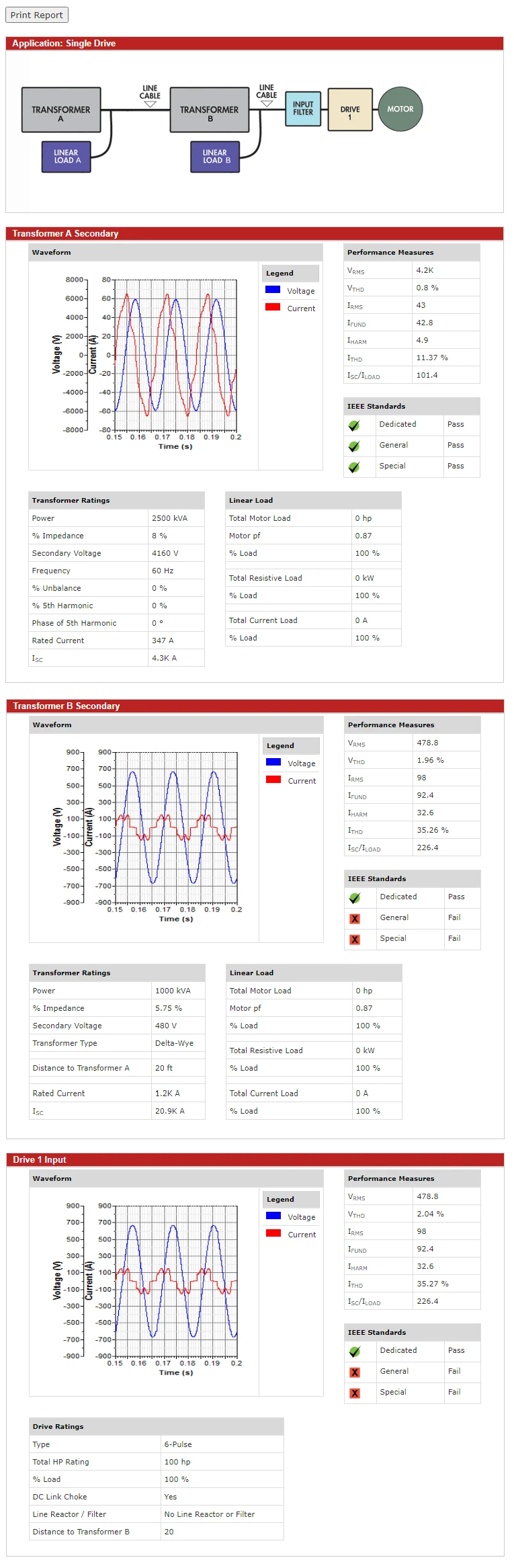
Rockwell Automation's Harmonics & Reflected-Wave Calculators are four engineering tools (for reflected-wave voltage, single- and multi-branch harmonics, and torque harmonics) that replace rule-of-thumb drive-cable sizing with real calculations for PWM AC drives, modelled against Allen-Bradley's own wiring and grounding guidelines. For a drive engineer, that's the difference between guessing a cable length and knowing exactly how much reflected-wave voltage stress a motor will see. I built these four calculators, each one modelling real drive, cable and motor behaviour rather than a simplified approximation.
The challenge
Replace rule-of-thumb drive-cable sizing with real calculations for harmonics, torque ripple and reflected-wave voltage on PWM AC drives.
The implementation
Built four engineering calculators — reflected-wave, single- and multi-branch harmonics, and torque-harmonics — each modelling drive, cable and motor behaviour against Rockwell's own wiring and grounding guidelines.
Where it’s used
Rockwell Automation's Allen-Bradley drive specification workflow.
Frequently asked questions
What are the Harmonics & Reflected-Wave Calculators?
They are four engineering calculators built for Rockwell Automation (Allen-Bradley), covering reflected-wave voltage, single- and multi-branch harmonics, and torque harmonics, replacing rule-of-thumb drive-cable sizing with real calculations for PWM AC drives.
What standard or guidelines do they follow?
Each calculator models real drive, cable and motor behaviour against Rockwell's own Allen-Bradley wiring and grounding guidelines, rather than a simplified approximation.
What did Mahmoud do on these calculators?
Mahmoud built all four calculators, modelling real drive, cable and motor behaviour so a drive engineer gets an exact reflected-wave or harmonics figure instead of a guess.